
This town
Making sense of Ottawa as a political capital

I have lived in Ottawa for over a quarter-century. I’m still figuring out this town.
Non-Ottawanians understandably view the city solely in National Capital terms; a place of political blowhards, patronage troughs, and meddling bureaucrats. There is a more conventional Ottawa of strip malls and suburban sprawl, thousands of ordinary public servants who will never enter the minister’s office, and the tech class in Kanata; people who go about the daily lives never once consulting The Hill Times.
But there is certainly a downtown Ottawa culture, comprised of three groups. There’s the politics class of politicians and aides; the advanced civil service class of executives and agency heads that spend a lot of time keeping an eye on the first class; and what I’ll call the hustler class of journalists, lobbyists, lawyers - and the occasional professor - who measure their success by their access to the other two classes. The business of downtown Ottawa is government; if someone on Sparks Street says they are in “the private sector,” they mean their company’s government relations shop.
Ottawa is livelier than Canberra, where I once lived, but tiny compared to London or Washington, giving a sense that with enough time and effort it just might be possible to know everything and everybody that matters. There’s only one traditional club, the Rideau, and one prewar hotel, the Chateau Laurier. (The Lord Elgin opened in 1941). As some truckers demonstrated in 2022, anything important happens within a few blocks. If you’re at the airport on Friday and can’t spot a prominent politician, you’re not trying. Last week I nearly walked into Joe Clark at the grocery store.
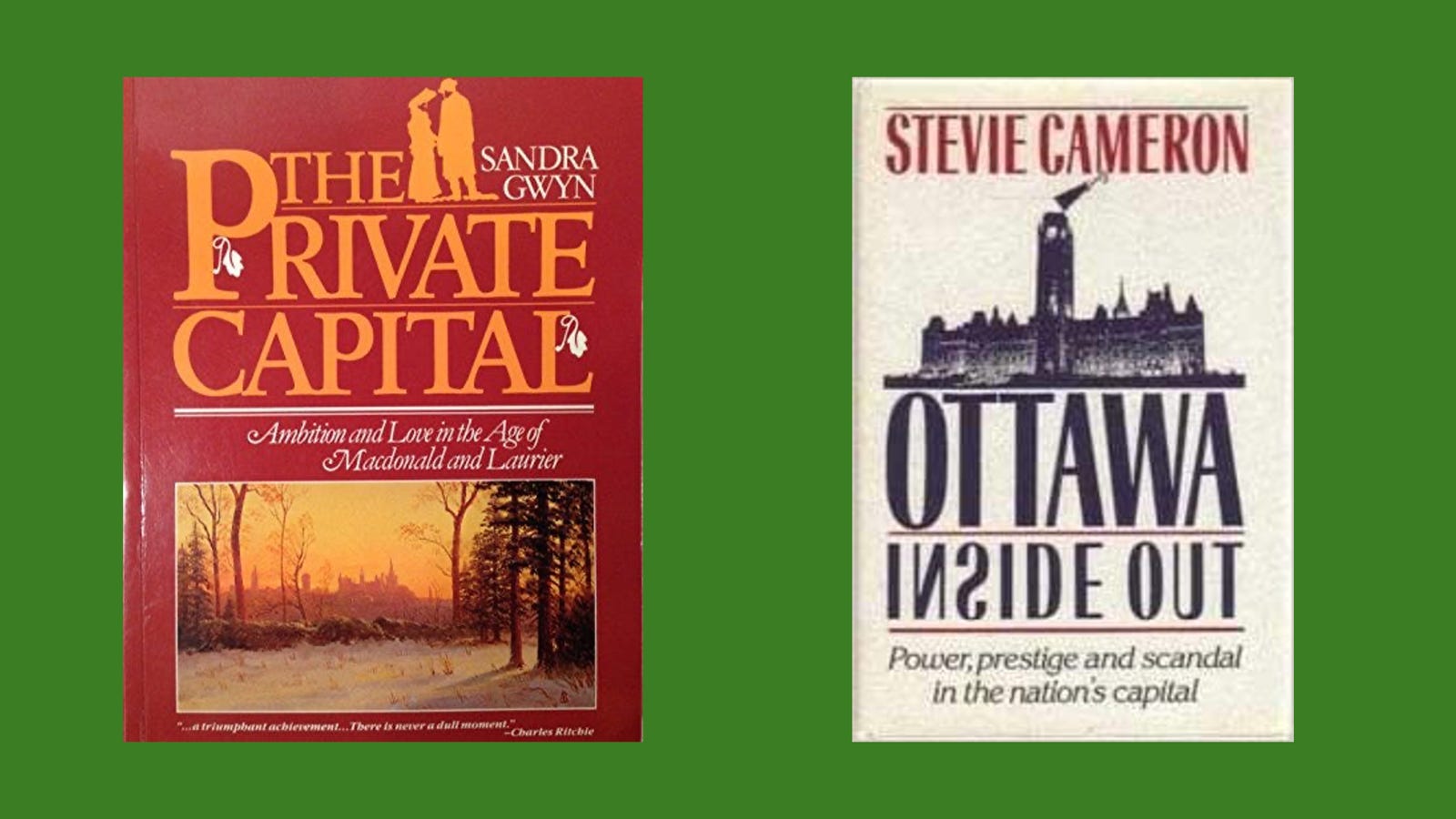
There are two good books about Ottawa as a political city: Sandra Gwyn’s The Private Capital: Ambition and Love in the Age of Macdonald and Laurier (1984) and Stevie Cameron’s Ottawa Inside Out: Power, Prestige and Scandal in the Nation’s Capital (1989). Both - and no surprise, by women authors - explore the interplay and overlap between public and private life in a government town.
Gwyn chronicles 19th century civil service families living in farmhouse conditions a few blocks from Parliament Hill. Cameron gives a snapshot of Ottawa in the 1980s, including the launch of The Private Capital in December 1984 as “the best party most people ever remembered,” before Tory barbarians killed the social scene. The latter is a cyclical theme stretching from Diefenbaker to Mulroney to Harper; that permanent Ottawa is Liberal, and stays that way because Conservatives arrive suspicious and remain aloof, perpetuating the cycle.
Ottawa Inside Out is now of limited interest if you don’t recognize the name Don Mazankowski, but its insider tone does a marvelous job of convincing you that with a little pluck, you too can figure out this town. Another regular Ottawa chronicler, Sandra Gotlieb, although better known for books on her Washington years, also followed a perennial theme that Ottawa was a simple little town easy to master, which is true if you’re comparing it to the biggest global capitals, and you have a climber’s knack for figuring out who and what is important.
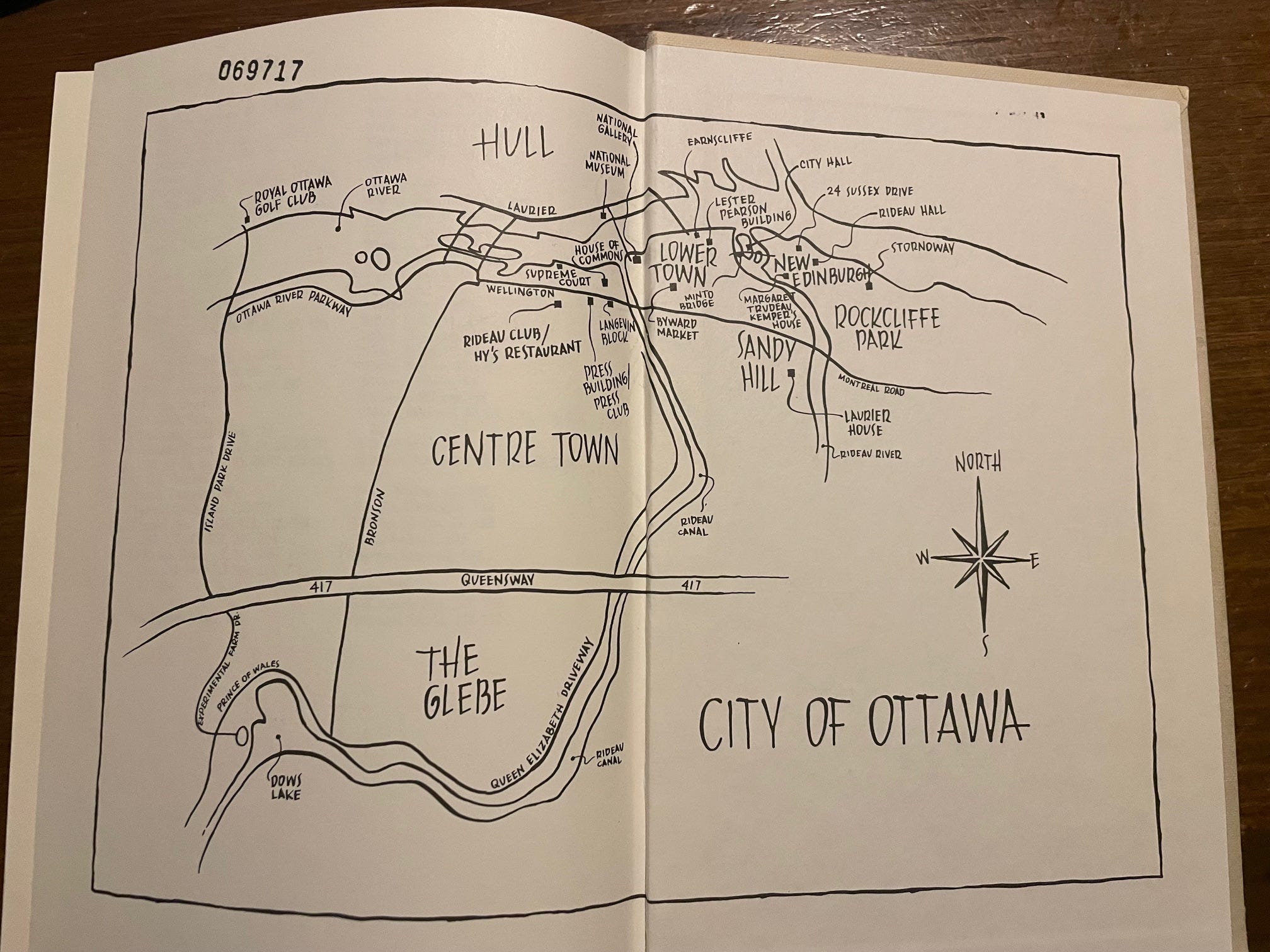
Downtown Ottawa has a national feel; most people came from somewhere else. The Westerners and Atlantic Canadians are divided between the ones that have made their nest here, and those that are counting the days and years until they can get back. People from the rest of Ontario settle here for good, as do many Quebecers, though usually across the river in Gatineau. The exception is Montrealers, who do everything possible not to move here in the first place; preferring to commute in on VIA as required. And Ottawa is also still in the end an English-speaking white man’s town. The sharp linguistic contrast between bilingual government and unilingual private events is always striking. There are plenty of women and racialized people. But when a white guy like me steps out from the Chateau Laurier ballroom and walks over to the human reality of Rideau Street, I realize just how white the crowd inside was, and how much women wanting to succeed have to follow the models set by men.
When I moved to the national capital in 2000, I searched for glimpses of the Permanent Ottawa I read about in Ottawa Inside Out. But it seemed elusive, and not just because I was on the bottom of the social order. I eventually found the Rideau Club, now on the 16th floor of a downtown office tower, the original building having burned down in 1979, and now and then I saw - and still see - glimpses of the traditional mandarin culture.
But the public service class keeps a low profile, because it is terrified of being turned into a Washington-style politicized bureaucracy. It resists incursions, preferring to grow from within, and there’s an inverse relationship between career success and having your name in the news. The opposite applies to the politics class, which is the highest ranking but has the shortest shelf life; today’s all-powerful minister or fearsome staffer is tomorrow’s nobody, unless they find ongoing success in the third hustler class.
And the hustling is constant. When I was in my thirties - a while ago - I realized I was semi-consciously checking out other men around my own age when I passed them on the street downtown; and they were doing the same. This was, er, not for other reasons, but because we were automatically assessing (1) whether we knew each other; and if so, (2) whether we represented a networking opportunity. I’d like to think I’m now a little more discreet, but it remains that no one in Ottawa looks down at the sidewalk, lest they miss a schmoozing moment.
What makes Ottawa elite culture different from other towns is that it’s not really about money. To be clear, everyone wants to be “comfortable”: a nice house in the Glebe, decent cars, respectable Aeroplan status, and their offspring’s education at Queen’s covered. But ultimately visibility and influence in national policy-making are the greater drivers, with a fuzzy relationship between the two.
Most people in Ottawa - politicians, mandarins, and hustlers - genuinely want to do good things for the country. But they also want to do good things for themselves. Public ambition and private ego are deeply intertwined in this town.
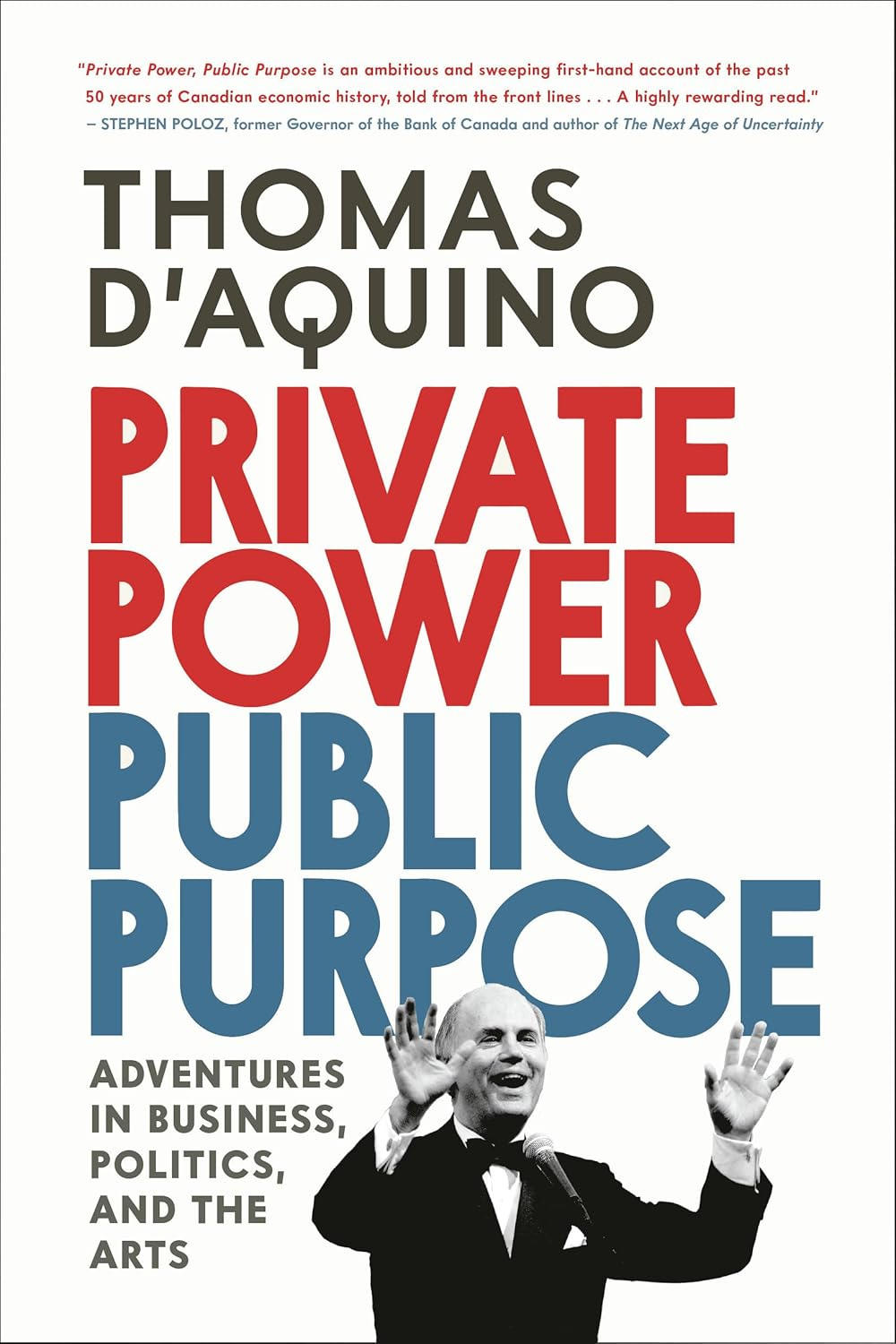
Another very Ottawa book is Thomas d’Aquino’s Private Power, Public Purpose (2023). The last founding member of the Rideau Club Roundtable (est. 1985) and an inspiration to prematurely balding men everywhere, d’Aquino was a familiar national face on TV screens from the 1980s to the 2010s representing the voice of corporate Canada on policy issues, and was Ottawa’s Ultimate Man About Town, hosting parties with his associate deputy minister wife Susan d’Aquino in their Hart Massey-designed home in Rockcliffe Park, chairing the National Gallery Foundation board for 18 years, and generally in the right place at the right time. d’Aquino, a kid from Nelson, B.C. who got his big start in the Pierre Trudeau PMO, was the ultimate Ottawa hustler, an act difficult to replicate today; I don’t think he would have done well on TikTok. Not everyone seeks such a visible reputation, either now or in d’Aquino’s time. But the interplay between wanting to make a difference for the country while also doing well for yourself remains.
Even professors feel they must hustle. A couple of years ago I wrote about the “lone wolf tradition” of studying Canadian political institutions, and I expanded on this in my Canadian Political Science Association presidential address. To study and write about government and Parliament, beyond quantitative spreadsheets on a desktop, researchers need to cultivate their own access and connections to power, built on their own personal brand and trust relationships. And so I’ve been hustling for twenty-five years, in this town that combines public ambition and private ego. In fact, maybe I’ve figured out Ottawa after all.
Great snapshot. I’ve lived in Ottawa three times, once as a Hill journalist, and I think you’ve nailed it.