
The Chief Lives
John Diefenbaker is becoming an unlikely symbol of Conservative Party unity

One of the many interesting things about the Conservative Party of Canada (est. 2003) is its selective embrace of a century and a half of “Conservative” party history.
The CPC likes to present itself as the sole and rightful heir of a long legacy of dedicated Grit fighters going back to 1867. But it skips over the 1990s, when the upstart Reform Party and Progressive Conservatives were at each other’s throats. That decade has been erased from party history, along with the 2000 flop of the Canadian Conservative Reform Alliance party (which was quickly inverted to Reform Conservative to avoid the label of CCRAP). In the same selective way, while the post-2003 party generally embraced Brian Mulroney as a person, who loyally returned the love, you won’t find a whole lot of gushing about the actual Mulroney government, under which the aforementioned split happened (kids, look up “CF-18 contract”). And Joe Clark? Never heard of the guy.
Because of the calamitous Reform split and the resulting wilderness years, the CPC runs a tight ship, is more inwardly than outwardly focused, and is always searching for low-cost ways to maintain party unity. In its initial years, the party thought it had a slam-dunk unifying figure in John A. Macdonald - nation-builder and the closest to a party founder. Accordingly, the Harper government doubled down on Sir John A., naming everything they could find in Ottawa after the Old Man, including the Ottawa River parkway, the former city hall next to the Global Affairs Canada building named after Lester Pearson, and the converted bank building across from Parliament Hill used for parliamentary events. However, even Conservatives are realizing the Macdonald name has too much baggage these days, and while there are still lots of Sir John A. diehards, that branding exercise is over.
Instead, a new person serves as a unifying CPC historic figure: the Right Honourable John G. Diefenbaker.
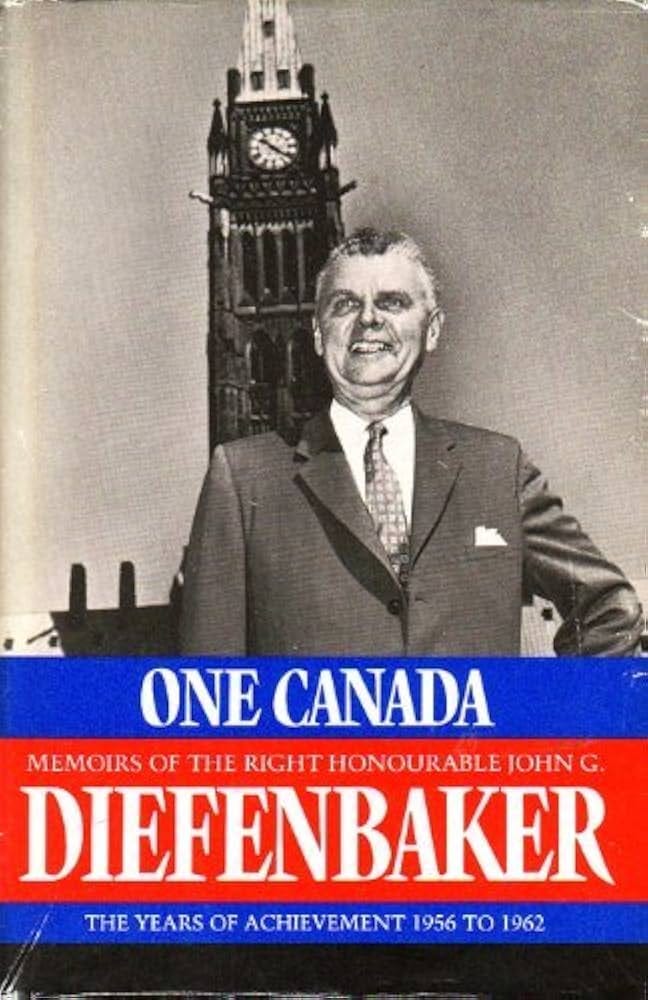
When one thinks of party unity, “John Diefenbaker” is not the first name that comes to mind. Diefenbaker was almost thrown out by his own cabinet; refused to resign even after the defeats of 1963 and 1965 and had to be pried out of the leadership; he then ran to replace himself at the 1967 convention, finishing fifth; and was…less than wholly supportive of his successors, Mr Stanfield and Mr Clark.
Even his loyalists found “The Chief” to be paranoid, mercurial, and egotistic. He was obsessed with his image, and is probably the only prime minister to plan every detail of his own funeral. It is well documented that the reason the Diefenbaker Centre exists at the University of Saskatchewan is not because it was USask’s idea, but because he proclaimed the donation of his papers in his speech after receiving an honourary degree and being named chancellor in 1969, leaving the university little choice but to accept this expensive white elephant.
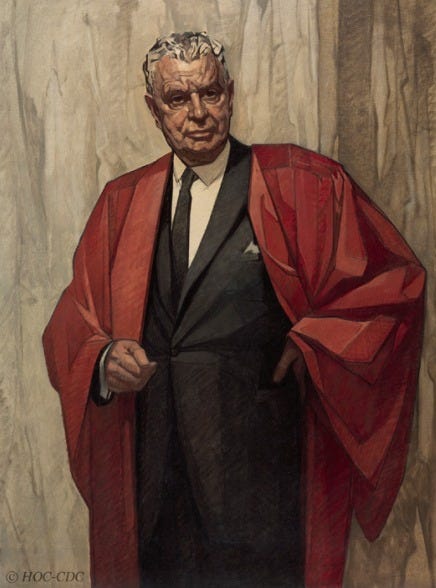
Dief saw enemies everywhere. One of the greatest Canadian political stories, recently confirmed by John Ibbitson in The Duel, is that a bomb threat was received at Diefenbaker’s funeral service in 1979, for which the entire Canadian political and public service establishment had gathered in Christ Church Cathedral in downtown Ottawa. Unsure what to do, the RCMP went to the front pew to consult the prime minister of the day, the aforementioned Joe Clark. Clark said the service could proceed, reasoning that the only person who could possibly wish ill-will on every individual present was up front in the coffin.
But I am noticing that a lot of Tories seem to think very well of Diefenbaker these days, because he fits today’s Conservative zeitgest.
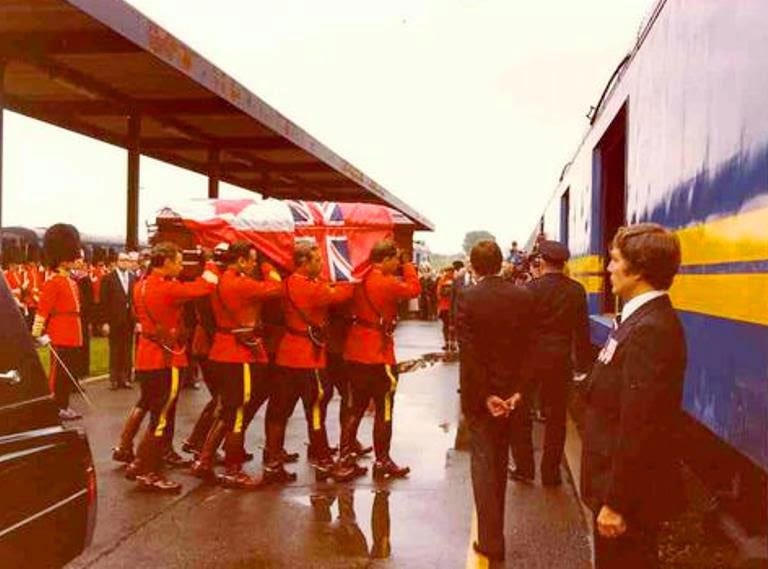
Dief was the original disruptor. Having never run anything bigger than his law practice before becoming party leader, he was a one-man-band uncomfortable with institutions or leading non-sycophants, and certainly incapable of being a team player. He pushed out the head of the Bank of Canada, James Coyne, and despised the Laurentian Elite with every ounce of his being, long before they acquired that name. His one establishment concession was a deep love of the monarchy and all things British, despite his Germanic roots. One of his last great fights was against the adoption of the Canadian maple leaf in 1964, and for his state funeral it had to share space with the old Red Ensign. Dief’s contradictions nicely match the Conservative Party of today.
He was ideologically inconsistent with a selectively progressive streak, and this allows anyone to find things to like about his government. He built his career as a criminal defense lawyer, fighting the power of the state, and opposed capital punishment and introduced a written Bill of Rights. He appointed the first woman cabinet minister in Canadian history (Ellen Fairclough), had the first non-white MP in his caucus (Douglas Jung), and oversaw the extension of the vote to First Nations in 1960. And as the first prime minister of neither English or French descent, he championed “One Canada” (the title of his three volume autobiography) and decried “hyphenated Canadians” (like “German-Canadian) as a divisive practice (though there is no evidence he remotely grasped the aspirations of Quebec and French-Canadians). And as for our current circumstances…Dief was decidedly cool to Americans, pushed for greater separation from the US in foreign and economic policy, was termed a “son of a bitch” by John F Kennedy, and went down in the 1963 election fighting against installing American nuclear weapons in Canada. His elbows-up credentials are pristine.
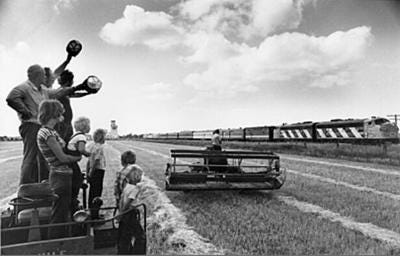
And while born in Ontario, Diefenbaker was deeply of the West, and more than anyone is responsible for establishing the Prairies as the great redoubt of Conservatism today. Prior to 1957 the region was a electoral tossup, but it became Diefenbaker heartland, then and now. Following his laying in state and funeral in Ottawa, an eight car train carried Diefenbaker home over three days through northern Ontario and Manitoba and Saskatchewan, with massive adoring crowds gathering at every stop to pay their respects to the great Chief. To praise John Diefenbaker today is to praise the virtues of the good and pure West, far from the corrupting bankers and intellectuals of Toronto.
Finally, Diefenbaker has the advantage of being dead for the last forty-seven years, making any new bozo eruptions or leadership rebellions highly unlikely, and all his foes are gone too. (Dalton Camp, the party president who took him down in 1966 and became Diefenbaker Enemy #1 ever thereafter, died in 2002).
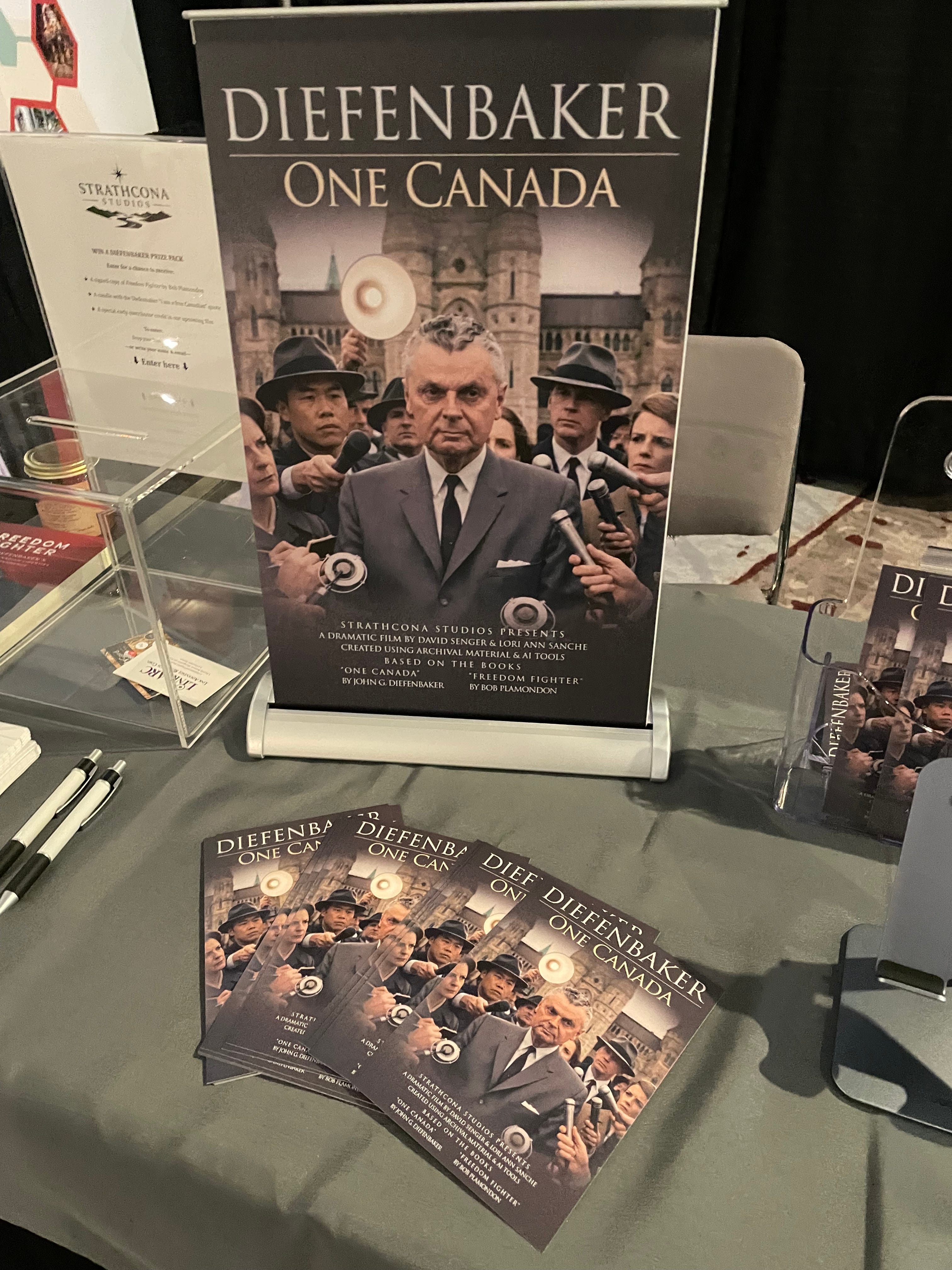
Yet the Chief lives, for example in Bob Plamondon’s recent Freedom Fighter: John Diefenbaker’s Battle for Canadian Liberties and Independence, (forward by Jean Chrétien) and fundraising for the AI-influenced feature film Diefenbaker: One Canada. And in my highly unscientific conversations with random Conservatives, Dief seems to be rising in estimation. Rather than the bitter paranoid and party muckracker of decades ago, the Chief is now poised to be the great icon of the Conservative Party in 2026.
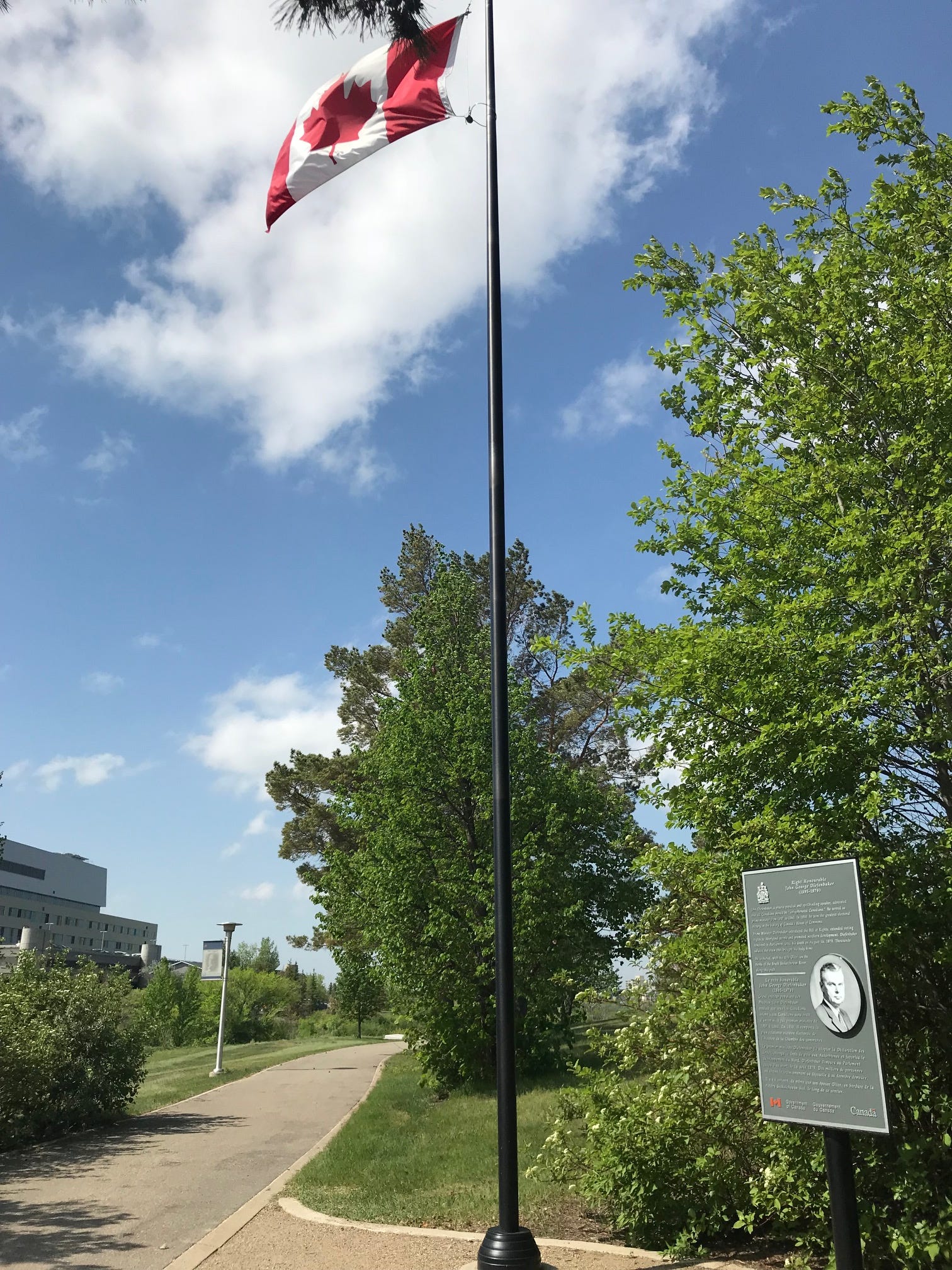
A final set of personal observations. I remember when John Diefenbaker died in August 1979, but only because it was on the news before my noontime viewing of The Flintstones; I didn’t know who he was, but I later heard my grandfather mentioning it to my mother and I grasped this had been someone of importance. I also like visiting that same Diefenbaker Centre at the University of Saskatchewan, where the great man is buried beside his loyal wife Olive. There’s a flagpole with a big fluttering Maple Leaf right beside the site. I swear if you listen carefully you can hear a turning sound in the grave.
Thanks Jon. I really enjoyed this. I recall the euphoria I felt when John Diefenbaker won the 1958 election with a landslide.. But as a budding Mechanical Engineer I didn't much like his killing of the Avro fighter plane
A good entertaining read!
Reta